
Toddlers
How to remember your child’s first words: 8 simple ideas
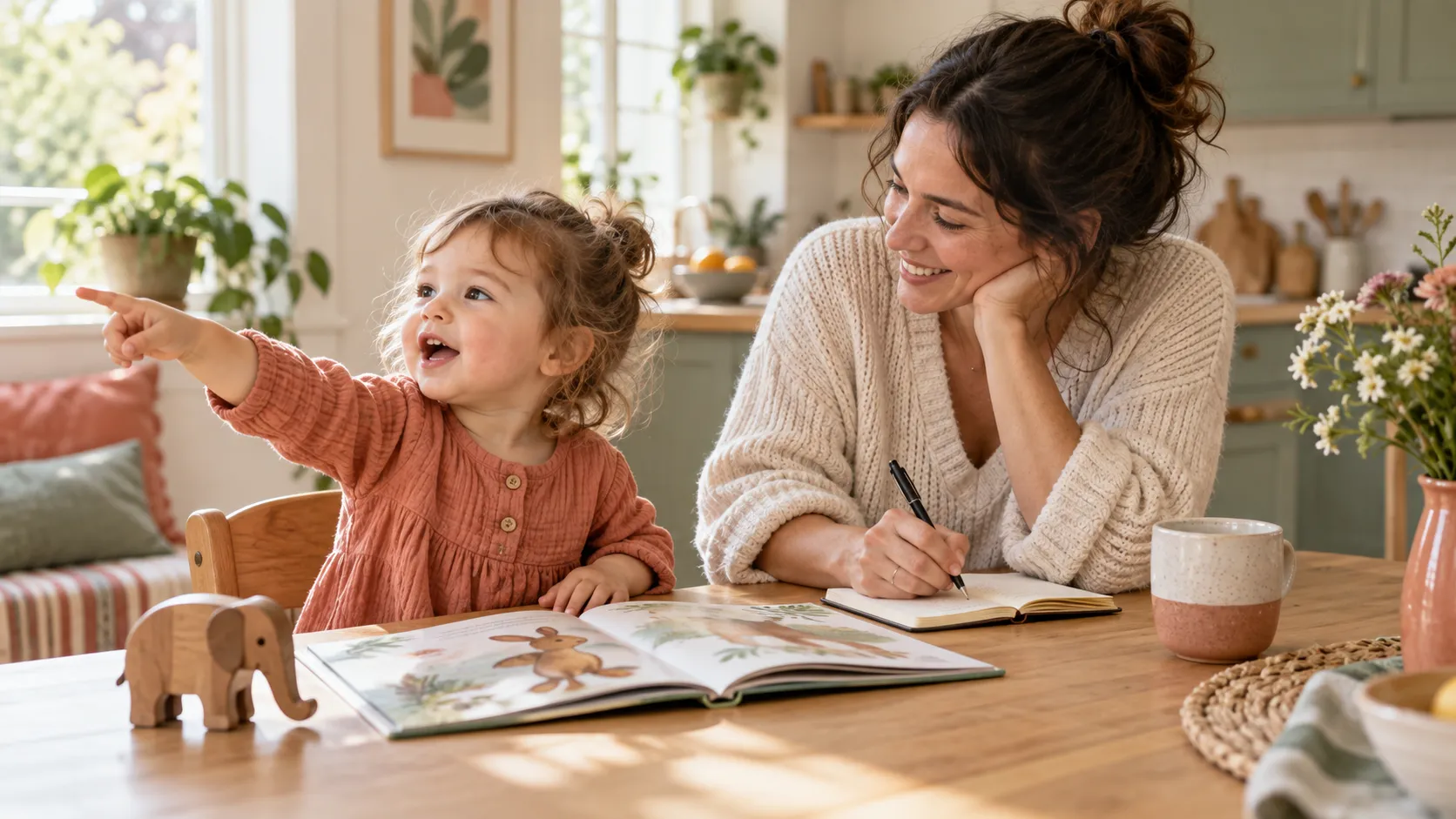
“Nana” for banana, “more there” at breakfast, or a very determined “me do it!”: remembering your child’s first words is not about keeping a record of achievements. It is about the phrases that belong to your family for only a short while – and later bring back exactly how your child once saw the world.
You do not need an elaborate language journal or a complete list. These eight ideas make it easy to preserve special words and sentences as they appear in everyday life.
1. Write the word exactly as it sounded
Do not tidy up the pronunciation when you record it. Your child’s version is what makes the memory personal. Try saying it aloud as you write, so your future self can hear it again.
2. Add the little story behind it
A word can quickly lose its meaning without context. Add one sentence: Where were you? What did your child want? How did everyone react? “Mimi” can then become the story of the cat that waited outside your door every morning.
3. Include a date and age
An approximate date is enough. Later, it is lovely to know whether the sentence appeared on a first holiday, during a new routine, or on an ordinary Tuesday. Age gives the memory context without turning it into a comparison.
4. Record their voice occasionally
A short audio clip or video preserves the melody, pauses and excitement that writing cannot. It is also fine to leave the camera down: the real moment matters more than its documentation. Ten natural seconds can be plenty.
5. Collect invented words, not only firsts
Children create wonderful names for things they do not yet know. A whisk might become a “soup tickler” and a watering can a “flower shower”. These small inventions reveal the logic and imagination behind their growing language.
One word, one sentence of context and a date are often all a good memory needs.
6. Ask other favourite people
Grandparents, godparents and carers see moments you miss. Every now and then, ask them for the funniest sentence they heard that week. It gives the collection more voices and preserves stories that happened beyond your home.
7. Repeat the same question
“What do you want to be?”, “What makes you happy?” or “What is Dad really good at?” Ask the same question again a few months later and you will see language, humour and perspective change. Keep it casual – one answer over dinner is enough.
8. Keep everything in one place
Notes, voice messages and videos are easily scattered across devices and chats. In Juno, you can save a photo or video together with the exact words and the story behind them. In a later memory book, the image remains on the page while a QR code keeps your child’s voice close too.
A tiny template to copy
- Word or sentence: …
- This is how it sounded: …
- What happened: …
- Date and age: …
Every child’s language develops differently. This collection is a keepsake, not an assessment. If you are concerned about your child’s speech or language, speak with your paediatrician or a qualified speech and language professional.
In the end, it does not matter whether you caught the very first word. What matters is allowing a few of those small everyday voices to stay with your family.