
Toddlers
Toddler toothbrushing: 8 ideas for fewer battles

Toothbrushing with a toddler can feel surprisingly big. Your child wants control, you want a reliable routine, and everyone is tired. Resistance does not mean you are doing something wrong. Small, repeatable adjustments often help more than a new reward chart.
1. Offer two real choices
“Would you like the green or the red toothbrush?” is easier to answer than “Do you want to brush?” Brushing still happens, but your child gets a meaningful say.
2. Announce the transition
A short warning keeps play from ending abruptly: “Two more blocks, then we are going to the bathroom.” Using the same phrase or tune each time can make the next step more predictable.
3. Let your child begin
Many toddlers want to do it themselves. Agree on a simple order: your turn, then mine – or the other way around. That leaves room for independence and for a grown-up to finish.
4. Turn the mouth into a place to explore
Look for “hidden crumbs”, carefully count teeth or send the toothbrush on a small journey. The game should support the routine rather than stretch it endlessly.
5. Make the time visible
A song, sand timer or child-friendly timer makes the finish predictable. Brushlings pairs a guided two-minute routine with animal masks that appear on the device while a child brushes. Visual steps can be useful for children who respond well to seeing progress.
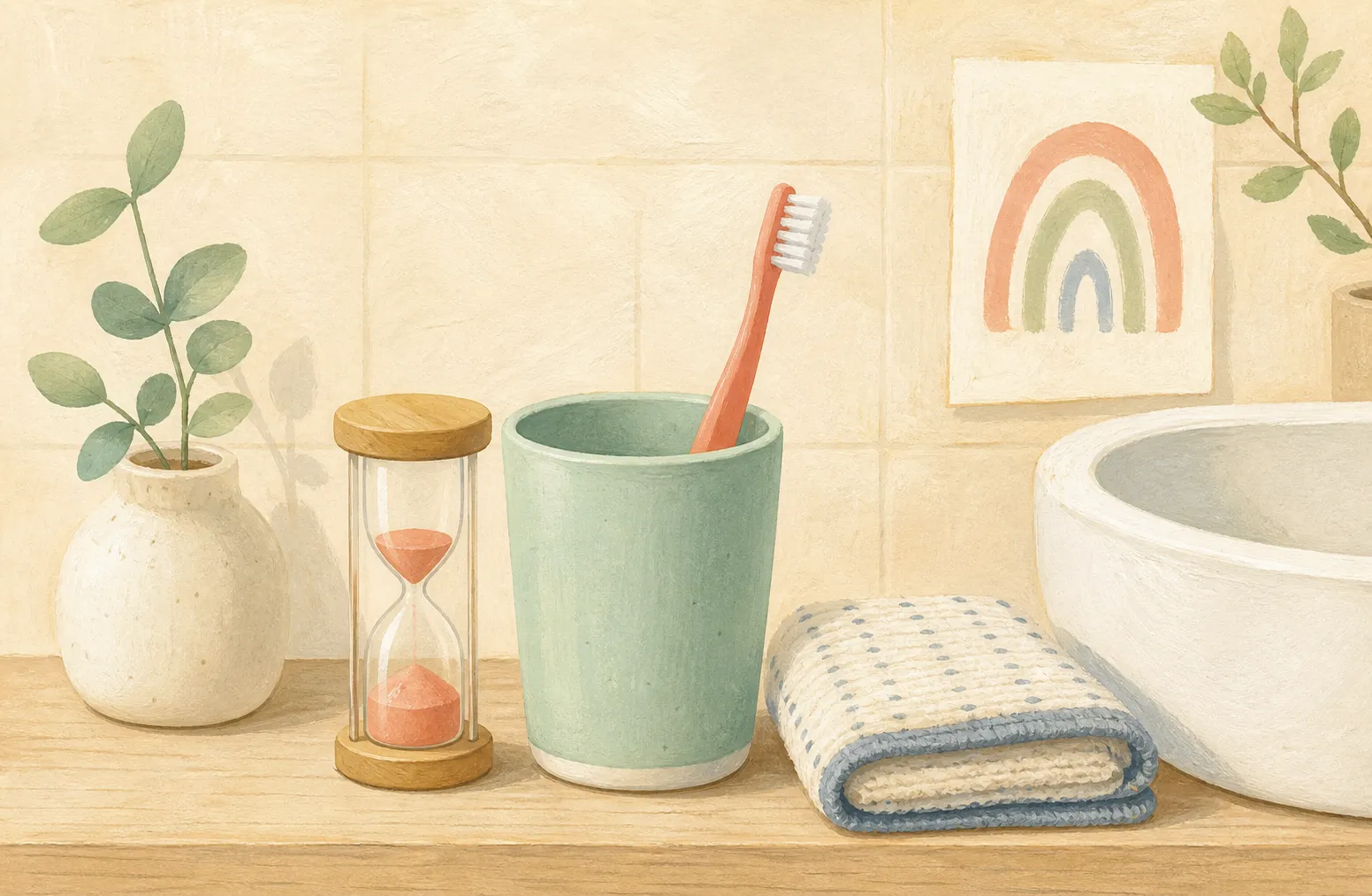
A visible stretch of time can make the beginning and end of the routine easier to understand.
6. Use a few calm words
Long explanations rarely reach an overtired child. A short phrase such as “I will help so we reach every tooth” can be both clear and kind.
7. Try a different position
Some children like standing on a stool; others are calmer sitting on a lap. Find a position that feels stable and comfortable for both of you. Safety matters more than balancing at the sink.
8. Celebrate continuity, not perfection
A tick on the calendar, a silly goodbye to the toothbrush or a quick “We did it!” is enough. If it turns into a small family story, add a sentence or picture to Juno. Everyday wins are often the first to disappear from memory.
When it stays difficult
Pain, intense fear or persistent problems deserve professional support. Ask your dental practice for advice tailored to your child, including brushing technique, toothpaste and oral health. These routine ideas are not a substitute for dental guidance.
A helpful routine does not have to be free of conflict. It can simply become a little more familiar each day.